Published: 03/12/2026
By Michal Ruprecht, Stanford Global Health Media Fellow
Pacific island nations and territories contribute only two hundredths of one percent to global carbon emissions, yet climate change disproportionately affects the region.
“This is a common theme that countries with low emissions often have the highest health burden,” Dr. Michele Barry, MD, said. Barry, senior associate dean of global health and director of the Center for Innovation in Global Health at Stanford University School of Medicine, who is an expert on climate change and its impacts on health.
“The Pacific islands illustrate one of the most visible climate justice paradoxes,” she added. “They contribute so very little to global greenhouse gases, yet sea level rise threatens their very existence and fresh water supply, and extreme weather affects food security and vector-borne diseases.”
The Pacific islands illustrate one of the most visible climate justice paradoxes,” she added. “They contribute so very little to global greenhouse gases, yet sea level rise threatens their very existence and fresh water supply, and extreme weather affects food security and vector-borne diseases.
Michele Barry, MD, Director of the Stanford Center for Innovation in Global Health
In January, Barry co-authored a call to action on climate-related health threats in the Pacific with Sara Damore, MS, program manager at the Stanford Center for Human and Planetary Health, and Caroline Ferguson Irlanda, social science research scholar at the Stanford Doerr School of Sustainability.
The paper, published in the journal Tropical Medicine and Health, examines the effects of climate on the region and urges international support for action to protect Pacific populations.
Among the most pressing concerns, the authors write, is how climate change contributes to disease spread and food shortages.
Extreme weather, warming air temperatures, and flooding events have driven a dramatic rise in the threat of mosquito-borne infectious diseases such as dengue and malaria, as well as water-borne illnesses. Climate change also threatens access to traditional food systems, straining and damaging system capacity and infrastructure.
Once these environmental changes reach communities, they can alter disease patterns. In Guam, New Caledonia and French Polynesia, for example, diabetes accounted for over one-third of deaths in 2024 — the highest burden recorded anywhere in the world.
Stanford’s global health media fellow Michal Ruprecht discussed the publication with Barry and Damore. This conversation has been edited for length and clarity.
Michal Ruprecht: Sara, how did this paper come to life?
Sara Damore: This is really based on research that I started when I was working with the World Health Organization. This paper was an opportunity to converge multiple fields and highlight the effects of the climate crisis.
You all begin the paper by outlining the disproportionate impact of climate change on the Pacific island region. Why did you choose to start with this?
Damore: The Pacific island region has been thrust into the throes of climate change because of its geography, not because of its combined emissions. It’s a natural starting place because the region is experiencing severe — and even existential — threats due to climate change. What I think has been really encouraging and, frankly, outstanding, is how much the islands have fought to keep the issue of climate change on the global stage.
What I think has been really encouraging and, frankly, outstanding, is how much the islands have fought to keep the issue of climate change on the global stage.
Sara Damore, Human and planetary Health PRogram Manager
I’m glad you made that point because it really resonated with me. Dr. Barry, Sara alluded to resilience. What’s a notable example of resilience in the Pacific islands?
Michele Barry: Indigenous strengths and cultural practices are examples of resilience. Leaders in the region are trying to exercise agency and voice their concerns on the international stage. There are some very powerful voices coming from small islands.
Sara, you mentioned this earlier. Can you speak to the interconnectedness of climate change and various chronic illnesses?
Damore: They’re not traditionally connected, because if you’re thinking about Type 2 diabetes, for example, diabetes is diet, right? But then what’s diet? Diet is what you have access to, what your cultural traditions are, and what you’re eating when you go to church. All of that is impacted by climate change.
On the topic of food, one issue particularly important to you is food system resilience. Why is that?
Damore: Well, it’s the first point of contact in terms of where you can have an immediate impact on noncommunicable diseases like diabetes. The Pacific islands are overwhelmingly impacted by these diseases. But with climate action, we can build more resilient food systems that combat that trend.
What’s next, and which areas need to be studied more?
Damore: In general, there’s a lack of stable and consistent data collection in the Pacific islands in terms of health data, so sometimes you’re going to be reliant on a survey that happens every 5 or 10 years, which makes it difficult to react in a timely manner to dynamic disease rates.
In terms of climate and health, I would say we need more interdisciplinary analyses. The more attempts we make to try to highlight what that impact is, the more informed we’re going to be. And so for me, it’s more about having creative ways to overcome the complexity of the situation.
The Stanford Center for Innovation in Global Health is committed to addressing the health impacts of climate change through research, education and global partnerships. One such initiative is the Climate Learning Initiative in Medical Education, also known as CLIME. Read more about how the program integrates climate and health education into medical training here.
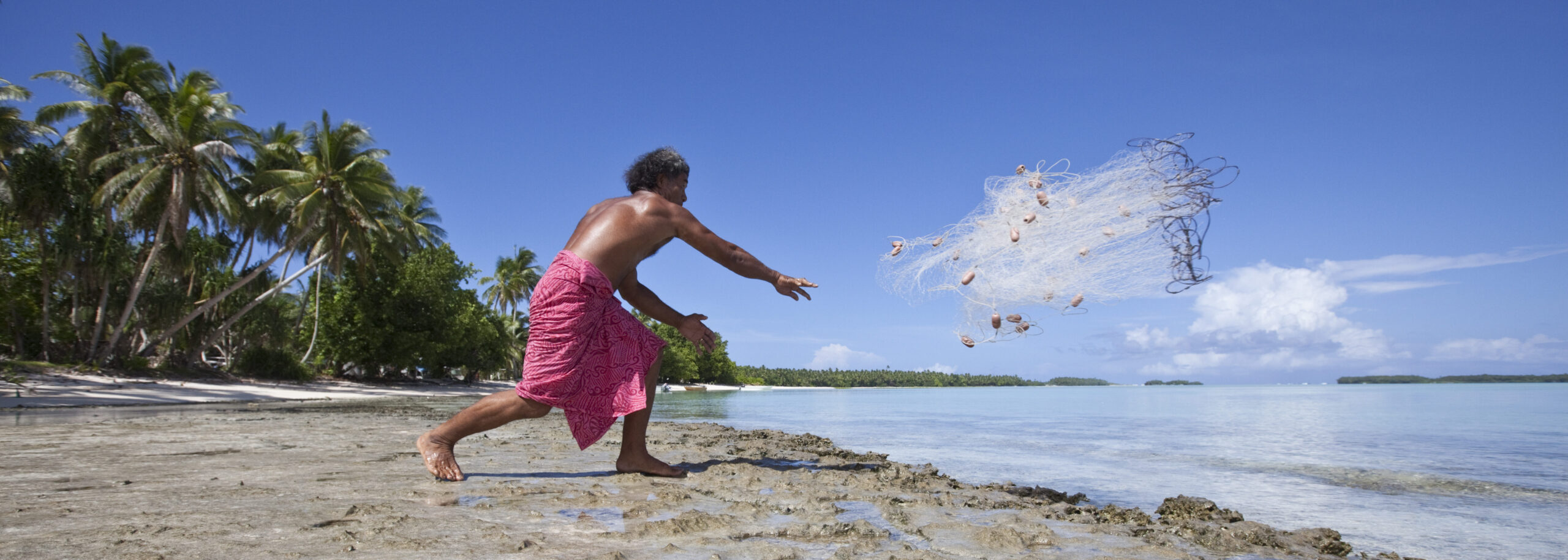
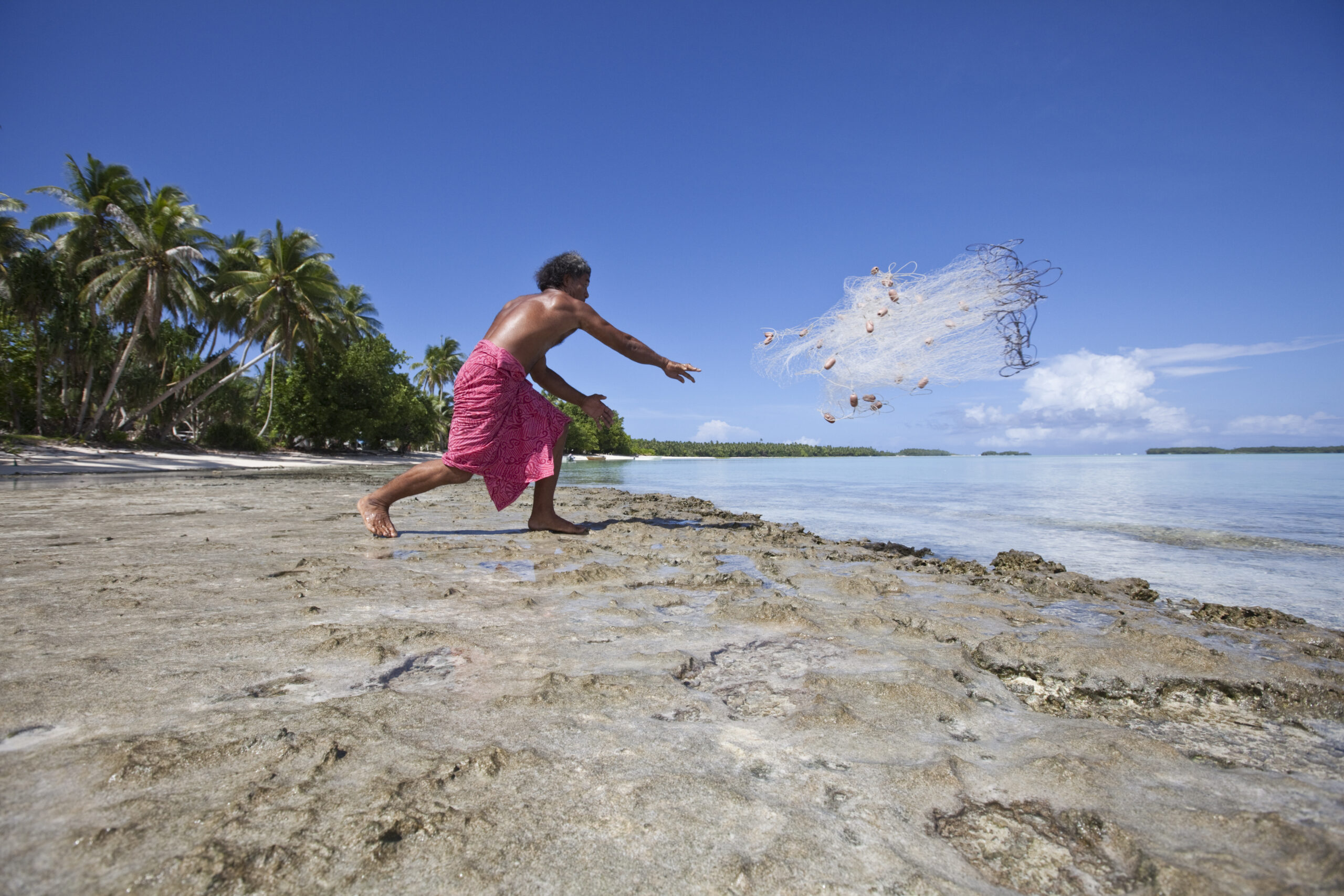
Photo Caption: Fishermen on the island of Funafui say that increased temperature, storms, coral bleaching and overfishing is causing a reduction in fish stocks. “It is getting very difficult to catch fish now,” says Chairman of the Tuvalu Climate Action Network, Tafue Lusama. “When I grew up, my grandfather and father used to teach me the shift from one season to the other and how it affects the movement of the fish in the sea from place to place. Those have been upset because of the changing weather patterns. The cost of fish caught around our islands has become very expensive. It is cheaper for a person to walk into a shop and buy a tin of fish which is processed thousands of miles away, than buying fish from a local fisherman.” By Rodney Dekker / Climate Visuals